Notes on Mark Bittman’s “Behind the Scenes of What We Eat”

Last week Erik and I went to see well-known food writer Mark Bittman speak on food policy. He spoke in a huge room in The California Endowment–and it was a full house. Afterward, Erik and I compared it to being in church. We were surrounded by people of the same faith, being told things we already know, and being reminded to be good. And I don’t mean that in a bad way! It never hurts to meditate on how to be better, to do more. Bittman is an engaging speaker and it was a great evening. I took notes, and will share a little of what I learned.

He spent a good deal of time describing how our national food system and food policy is depressing and screwed up. We all know this, right? Factory farms, fuel waste, massive environmental degradation, obesity crisis, etc. & etc.

(One quick scary fact from the roll of shame: Did you know that 80% of antibiotics used in the US are fed to farm animals? That number has been shooting up fast for the last 20 years. Why are they used on animals? Not so much for illness, but rather to prevent illness in animals living in overcrowded and unsanitary conditions, and to speed growth. They’re prophylactic. Lovely. Antibiotic failure happens to be one of my favorite doomsday scenarios.)

Bittman believes that in 50-100 years we will no longer be shipping food across country or across planet–we’ll be relying on local/regional agriculture systems, based on family farms. Whether this shift is a positive, pleasant transition or made in a state of dreadful calamity, is entirely a matter of how soon we begin working on the shift.
Continue reading…

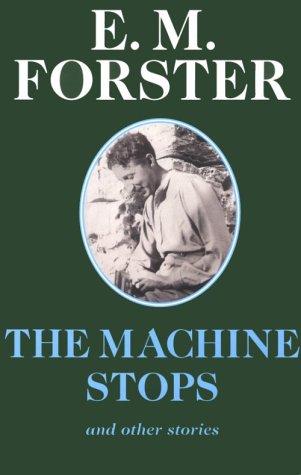
Book Review: The Machine Stops by E.M. Forester

Imagine, if you can, a small room, hexagonal in shape, like the cell of a bee. It is lighted neither by window nor by lamp, yet it is filled with a soft radiance. There are no apertures for ventilation, yet the air is fresh. There are no musical instruments, and yet, at the moment that my meditation opens, this room is throbbing with melodious sounds. An armchair is in the centre, by its side a reading-desk-that is all the furniture. And in the armchair there sits a swaddled lump of flesh-a woman, about five feet high.

Those are the first words of The Machine Stops, a haunting, odd–and oddly prescient– short story about the dangers of over-reliance on technology. It is extra noteworthy for a few reasons. The first is that it was written by E.M. Forster. Yes, that one. Passage to India Forster. Room with a View Forster. Who knew he dipped his toe in SF?

Continue reading…

Book Review: The Blood of the Earth: An Essay on Magic and Peak Oil

Phoebe

Phoebe says that despite her midnight coat and lambent eyes, she has nothing whatsoever to do with magic. Or peak oil. And for the record, she also scorns Halloween.

What do magic and peak oil have to do with one another? Quite a lot, actually, if you believe the author, John Michael Greer. And if you read The Blood of the Earth: An Essay on Magic and Peak Oil you’ll probably come to agree with him, because in this book, as in all of his writing, Greer is remarkably lucid, straightforward and persuasive.

Blood of the Earth is unlike any other book you’ll read on peak oil. It’s challenging, honest, sobering and inspiring.

It’s not a end-times book. Greer doesn’t do apocalypse. Nor is it an airy-fairy “we’ll save the world by the magic of positive thinking” sort of book. Instead, it is an investigation of the spiritual/psychological impulses that play out in our responses to peak oil. Part of this is understanding behavior and propaganda in magical terms. To do this, Greer offers a quick, intriguing primer on Western magic.

Continue reading…

Book Review: More Other Homes and Garbage Designs for Self-Sufficient Living

If I could have only one book on my zombie apocalypse bookshelf it would be this one. Though it has to be one of the worst book titles ever, More Other Homes and Garbage: Designs for Self-Sufficient Living, by Standford University professors, Jim Leckie, Gil Masters, Harry Whitehouse and Lily Young has everything you need to set up your off-grid compound. This book, first published in 1975 and revised in 1981, grew out of a heady period in appropriate technology research and DIY hippie experimentation that took place in the late 1960s and 1970s. In some ways it’s the rural version of the original urban homesteading book, The Integral Urban House: Self Reliant Living in the City.Both books, not coincidentally, share the same publisher.

Feeding the digestor on the homestead. An illustration from More Other Homes and Garbage.

More Other Homes and Garbage covers alternative architectural materials, passive cooling and heating, home power generation, solar water heating, methane digesters, sewage reuse and disposal, water supply, small scale agriculture and aquaculture. All topics are covered in great detail with, as is expected for a group of engineer/authors, lots of formulas and tables. While some material is out of date (Art Ludwig has taken greywater well beyond what’s in this book), most of the 374 pages of More Other Homes and Garbage are still very useful.

I especially like the can-do DIY tone of the introduction which describes a middle ground between “terminal pessimism” and “technophilic optimism.” What’s depressing, in fact, is that a lot of the topics in this book have not received much attention until very recently. The frivolous 80s and 90s were simply not the time for More Other Homes and Garbage. Thanks to the great recession, however, this book is relevant again. Get your copy before vengeful Mayan time travelers zap the interwebs in December.

Update July 31, 2012
A Root Simple reader, Lisa, pointed out that you can download this book for free here. Thanks Lisa!