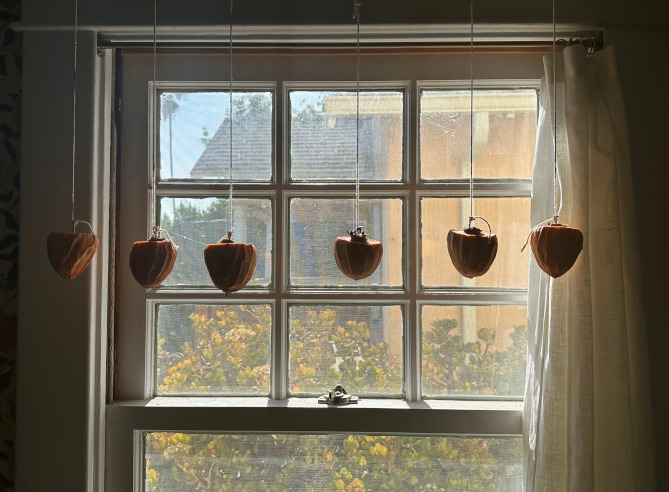
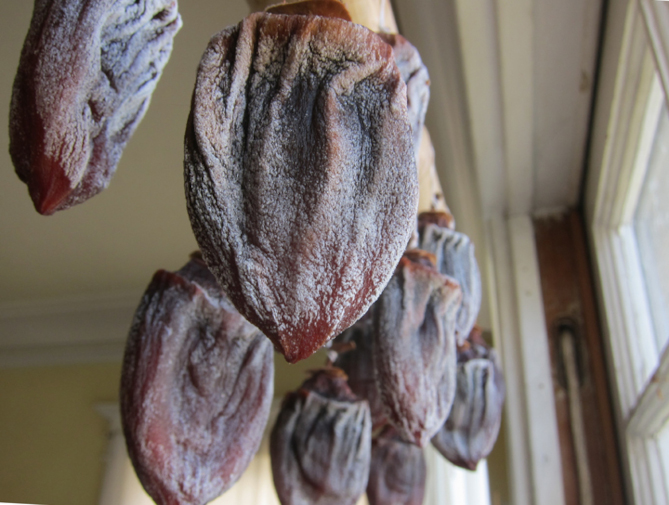
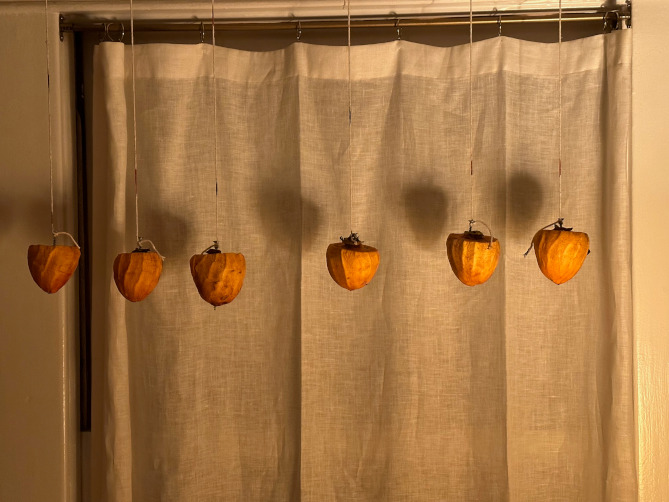
But a good year for spaghetti:
Picture Sundays: Doberman Chariots

“Ready for the race! Brutus of Quintre and his charge are ready for the sulky races, a regular feature of some of the South African sporting events.” Photos via The Doberman Insider.
Now that we are without a car, it’s time for us to figure out alternative forms of transportation. Our late dog was a Doberman and I remembered a book we used to have about the breed that showed some unusual events that used to be held in South Africa in the 1970s: harness racing with Dobermans and kid jockeys!
Remembering just how powerful and fast our Doberman was, I imagine these races were quite a thrill for the kids in those carts.

Try this in the US and, no doubt, child protective services would shut down the fun in no time. For the adult version I imagine we’d need a team of Dobes to pull our cart. Practical transportation and the start of Los Angeles’ answer to the Iditerod!
Saturday Linkages: Poison, Pee and Plagiarism

Birdhouse shaped like a Google Map icon. Via Dornob.
For the birds
Avian Accommodations: Google Map Pin-Shaped Birdhouses | Designs & Ideas on Dornob http://dornob.com/avian-accommodations-google-map-pin-shaped-birdhouses/ …
Thar she blows . . .
Here’s to No-Blow Gardens | Garden Rant http://gardenrant.com/2013/03/heres-to-no-blow-gardens.html …
DIY
Pure Salvage: 10 Eclectic Tiny Homes Built with 99% Scrap | Designs & Ideas on Dornob http://dornob.com/pure-salvage-10-eclectic-tiny-homes-built-with-99-scrap/ …
Poison
Umm…what exactly is botulism? (Part I) http://wp.me/p2TfI0-64
The case of the poison potato: http://boingboing.net/2013/03/25/the-case-of-the-poison-potato.html …
Pee
How To Use Pee In Your Garden http://www.nwedible.com/2013/03/how-to-use-pee-in-your-garden.html …
Plagiarism
Jane Goodall’s Troubling, Plagiarized, Error-Filled New Book, ‘Seeds of Hope’ http://thebea.st/X9k58O
???
Hard times for Marshmallow farmers!: http://youtu.be/h9RfuD1Im4U
Vegan Black Metal Chef, A Vegan Cooking Show Like No Other http://laughingsquid.com/vegan-black-metal-chef-a-vegan-cooking-show-like-no-other/ …
The Archdruid Report: The Illusion of Invincibility http://thearchdruidreport.blogspot.com/2013/03/the-illusion-of-invincibility.html?spref=tw …
For these links and more, follow Root Simple on Twitter:
Follow @rootsimple
Bushcraft Video
Now that we’re car-free, we may be spending even more time together then we already do. How will we keep succumbing to cabin fever, prairie style? (Prairie style means “with axes.”)
Well, while Erik obsesses on those pernicious skunks and even more heinous texting-while-driving music video producers, I’ll be laying low, watching bushcraft videos on YouTube.
We may as well give up our Netflix subscription because this YouHole is bottomless. I’ve discovered there are hundreds of men roaming about the woods with their video cameras in one hand and their survival knives in the other, ready to share their knowledge with you. And they are almost all men. I’ve only found a couple of women who put their adventures on video.
I’m not sure why this is such a male dominated field, except that it is greatly fueled by the love of pointy implements and the display and discussion of such implements–which seems a very masculine past time. But that’s generalizing, because I can attest that around our house, I’m the one with the fetish for sharp blades. And fire. And making things out of tin cans.
Anyway, there are many bushcrafters on video, but only a few rise to the top. Many–many–are hampered by poor sound quality and camera work. Their info may be good, but if I can’t hear them, or see them, I’m clicking on down the road.
In my journey of a thousand clicks, I’ve discovered many nice surprises, and I’ve learned things, too. These video makers are spread all over the world, so it’s a really nice opportunity to see different natural landscapes, and learn how people work in them. Winter survival skills may not do me a lot of good here in LA, but I do love watching video of the snowy Alps.
If you fall down this YouHole, you may find yourself gravitating toward a bushcrafter who lives in your climate zone, or one who shares your world outlook. As for myself, I’m pretty much all about watchability–yes, that’s a word–and that leads me to a couple of recs.
We’re Car Free

Street art by Skullphone.
Well, at least temporarily. Some idiot piloting a SUV sturdy enough to patrol the streets of Kabul rear-ended me last week. He was probably busy posting a Yelp review on his smart phone. I’m still in pain and our car is totaled, but I’m thankful I’m alive.
In the meantime Kelly and I have no car. Normally this isn’t much of an issue as I can get around by bike/public transit. But my neck and back are too creaky right now to do that. I’m considering some crazy options:
Become agoraphobic
I remember an interview with actor Harry Dean Stanton in which he described the way he deals with the craptacularness that is the City of Los Angeles. His answer? He never leaves the house. I could have stuff delivered–everything from straw bales to groceries are just a click or phone call away. Why venture out on this town only to see miles of deteriorating streets overseen by corrupt politicians? When I want to get some nature time, I could rent a car. We’d save thousands of dollars.
Buy a Car
Car shopping, for me, is about as fun as a root canal without Novocaine. Was the 19th century carriage industry this scammy?
Take the car of the idiot who hit me
My new Jeep Wranger would be courtesy of the music video producer who totaled my car. (His mammoth vehicle, by the way, was hardly scratched.) You should have to face consequences for negligence–this was not an “accident,” after all. Wreck someone else’s car by your own stupidity and you should have to donate your car to the person you hit. Nassim Taleb would suggest that the same principle should apply to Wall Street bankers. There would be a whole lot less texting while driving and financial risk taking if, as Taleb puts it, “captains went down with their ships.”
Move to Venice, Italy
Not only is Venice car free it’s also bike, moped, bus and train free. But then I’d probably end up in a nautical accident caused by a texting gondolier.
Faster, Pussycat! Kill! Kill!
I’m cursing my useless music degree. If only I had gone to a college that combined rigorous writing classes with machine shop and auto repair. My dream: a Kickstarter campaign to fund the conversion of a 1970s era Dodge Viper into a bad-ass electric vehicle. Or fuel it with our humanure methane digester. Airbrush the Root Simple logo on the door and folks would really notice our arrival at book signings–especially when we do donuts in the parking lot.

So, dear readers, what do you think we should do?
To each hen her own egg

As of June we’ll have had our new hens for a year, and we’re very pleased with them. They’re unusual hybrids. They’re a cross between a Barnevelder, a pretty utility/show breed named after the Dutch town where it was developed, and the more popular Ameraucana. We got them from our friends at Winnetka Farms, who raise Barnevelders and tried this cross as an experiment.
They’re very nice hens. Pretty. Mild-mannered. Quiet. There’s never any squabbling or pecking. And then are prolific layers of big eggs with big yolks. And here’s what’s interesting: Barnevelders lay brown eggs. Ameraucanas are known for their blue to green eggs. Our “Winnetkavelders” each lay a distinct color egg.
We posted about this when they started laying, but as the hens got older, their eggs became even more distinct, so I thought it worth another mention. All four hens look the identical, but their eggs are different, each expressing different aspects of their parentage. One is classic Barnevelder brown, one is speckled, one is light olive green and the other dark olive drab. The picture doesn’t capture the olives at all.
It’s useful to be able to associate each hen with her egg, so you know if there are any problems with her laying. Unfortunately, these four ladies look so much alike–and tend to visit the nesting box in pairs–so we haven’t been able to ID their eggs yet. Closer surveillance is required!
How to make your soup wonderful: Wild food soup stock

We’ve mentioned urban foragers and foodie extraordinaires Pascal Baudard and Mia Wasilevic before. They not only forage food, but go on to make really good stuff with it. One of their websites is Urban Outdoor Skills, and I like to go there to check out a section called the Food Lab, where they talk about food products they’re experimenting with, and give how-to’s.
A few months ago Erik brought home a beautiful bouquet of nettles. I decided to try one of the Food Lab projects that intrigued me — Wild Food Soup Stock Preserved with Salt. This is no more than a bunch of finely chopped vegetables, herbs and greens (wild or not) mixed with plenty of salt to preserve it. I made mine with onion, celery, parsley and those nettles. It makes a strong, salty paste that keeps well in the fridge. My first jar is almost finished, and I’ve been using it for months. It still looks good.
Pascal says this is a traditional European method of making instant soup stock, but instead of using it as a stock by itself, I’ve been using it as a finishing touch at the end of cooking up a pot of something. It really helps at that tricky moment when you’re standing over your soup pot, spoon in hand, asking yourself, What does this soup need? Somehow it improves the flavor in a subtle, magical way–and in the meantime, garnishes the soup with tiny bright confetti flecks of green. Note that this stuff is super-salty–so I hold back on the salt until I add this, and then add more if necessary.
Straw Bale Gardens

Tasha Via’s straw bale garden.
Michael Tortorello (who profiled us when Making It came out) is one of my favorite writers covering the home ec/gardening subjects we discuss on this blog. He had an article last week in the New York Times, “Grasping at Straw” on straw bale gardening. We’ve very tempted to give the practice a try in our backyard. Why?
- We have lead and zinc contaminated soil so growing veggies in the ground is questionable.
- We live on a hill and it’s easier for us to drag a straw bale up the hill rather than bulk or bagged soil.
- Straw bale gardening is an old and tested practice.
- Straw bale gardening comes with the endorsement of horticulture professor and noted garden myth debunker Linda Chalker-Scott.
- The practice has been tested in dry climates like ours.
- After the bale has decomposed you get compost you can use elsewhere in the yard.
- I suspect that skunks will be less interested in digging in a bale (please correct me if I’m wrong here).
Now, if we had good soil I wouldn’t bother with the extra work of buying and prepping a straw bales garden. But, given the idiosyncrasies of our situation, it seems like a good solution. Frankly, I don’t know why we didn’t think of it sooner. Our thanks go out to Michael for reminding us of this possibility with his article.
The biggest possible downside with this method is that the straw may contaminated with a persistent herbicide, like Dow Chemical’s Clopyralid. This is a type of herbicide that is not broken down by composting. It’s not even broken down in an animal’s digestive track. It can linger in organic matter for a year or two, stunting the growth garden plants. (See Killer Compost).
Despite this risk, we’re going to go ahead and grow some food in bales anyway and see what happens. We’ll also be testing our straw.
So, off we go into another gardening adventure/research pit!
So have any of you tried, or are considering trying, straw bale gardening? How did it work?
Some resources on the topic:
strawbalegardens.com–the website of Joel Karsten, profiled in Tortorello’s article and the author of a book and a downloadable pamphlet on straw bale gardening.
Some tips from an experienced straw bale gardener at The Gardener’s Pantry
We’re going to bioassay (that is, test ) the straw from our local feed store. The Compost Gardener has good instructions for this. In our case, we’re doing the method where you plant beans in soil, and water them with tea made from the straw.
Washington State University–instructions for how to start a Straw Bale garden.
Picture Sundays: Red Baron Peach in Bloom

A Red Baron peach tree blooming at a friend’s house. I planted one of these at my mom’s place and I wish I had one too. Beautiful flowers followed by tasty fruit.
Saturday Linkages: Straw Bales and Bike Hacks

Photo by Tracy Walsh/Poser Design
Gardening
Straw bale gardening in the New York Times: http://nyti.ms/10kt1Hf
DIY
How to fix a bicycle tube http://www.afrigadget.com/2013/02/22/how-to-fix-a-bicycle-tube/ …
Bike headlight displays speed: http://boingboing.net/2013/03/20/bike-headlight-displays-speed.html
Build-It-Solar Blog: A Inexpensive DIY Blower Door http://www.builditsolarblog.com/2013/02/a-inexpensive-diy-blower-door-that.html?spref=tw …
For these links and more, follow Root Simple on Twitter:
Follow @rootsimple